


Plant Managers: How Steam and Hot Oil Heat Tracing Prevent Slow Flow and Plugged Asphalt Lines

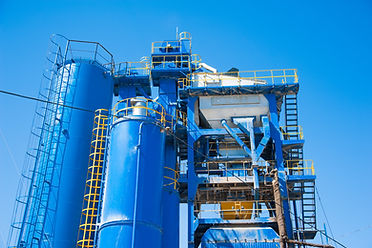
For plant managers responsible for uptime, slow asphalt flow is not just a maintenance issue — it’s an early reliability warning. In most facilities, the root cause is not insufficient heat, but inconsistent heat delivery within the tracing system.
In asphalt service, maintaining uniform pipe temperature using steam tracing or hot oil tracing is critical to keeping product flowing and preventing costly shutdowns.
Why Asphalt Requires Consistent Heat
Asphalt is extremely temperature sensitive. Even small temperature drops can significantly increase viscosity. When viscosity rises, pumps must work harder, transfer rates decline, and product begins to accumulate along pipe walls. This is why asphalt facilities rely heavily on steam tracing systems or hot oil tracing systems to maintain temperature in transfer lines, pumps, valves, and storage connections. Both steam and hot oil tracing provide the heat density required for heavy hydrocarbons like asphalt. When properly designed and maintained, they deliver reliable temperature maintenance across long pipe runs and through harsh operating conditions.
However, if heat delivery becomes uneven anywhere in the system, asphalt thickens locally and flow problems begin.
Why Asphalt Lines Develop Flow Problems
Most plugged asphalt lines develop gradually as heat tracing performance declines. Several operational factors commonly contribute.
Uneven Heat Distribution
Whether using steam tracing or hot oil tracing, consistent heat delivery across the entire piping system is essential. Pressure drops, circulation problems, or poorly balanced distribution networks can create sections of pipe that receive less heat.
These areas become temperature bottlenecks where asphalt begins to thicken.
Cold spots most commonly occur at:
Long pipe runs
Elevation changes
Branch connections
Remote loading lines
Once viscosity increases in one location, it restricts flow and increases upstream pressure throughout the system.
Condensate or Flow Management Issues
Heat transfer systems depend on proper fluid movement to deliver energy.
In steam tracing systems, this means removing condensate efficiently through properly functioning steam traps. If condensate accumulates in the tracer line, heat transfer efficiency drops and pipe temperatures decline.
In hot oil tracing systems, circulation must remain consistent throughout the loop. Restrictions, pump issues, or air pockets can reduce heat transfer and create localized cooling.
In both systems, poor fluid management leads directly to uneven pipe temperatures.
Insulation Integrity
Even well-designed heat tracing systems cannot compensate for damaged or moisture-saturated insulation. When insulation becomes wet or deteriorated, heat loss increases significantly. Asphalt begins cooling first at the pipe wall, which narrows the effective flow diameter and gradually restricts movement. For plant managers, insulation integrity is a critical part of process reliability — not just a mechanical detail. Regular inspections can prevent heat tracing systems from becoming overloaded.
Idle Lines Without Temperature Maintenance
When asphalt lines cool between transfers, product along the pipe wall thickens and adheres to the surface. Over time, this buildup reduces the internal diameter of the pipe and increases pumping resistance.
Maintaining controlled hold temperatures through steam or hot oil tracing helps prevent these repeated viscosity cycles and reduces buildup risk.
Why Increasing Temperature Is Not the Right Fix
When operators notice slow asphalt flow, the immediate reaction is often to increase the temperature. While this may temporarily restore movement, it does not correct uneven heat distribution within the tracing system. Raising temperatures can also create additional problems:
Accelerated asphalt oxidation
Product quality degradation
Higher fuel or energy costs
Increased safety risks
Excessive thermal stress on equipment
The goal of a tracing system is uniform temperature, not maximum temperature.
Correcting heat delivery issues is far more effective than simply adding more heat.
What Plant Managers Should Monitor
Plant managers can significantly reduce the risk of plugged asphalt lines by monitoring several key indicators within their heat tracing systems.
Heat Medium Performance
For steam systems, this includes monitoring steam pressure stability, trap functionality, and condensate drainage. For hot oil systems, circulation flow, pump performance, and supply temperature consistency should be routinely verified. Stable heat delivery ensures consistent pipe temperatures.
Temperature Uniformity
Periodic temperature checks along transfer lines, valves, and fittings can quickly identify developing cold spots. Infrared scanning is a common method used to detect uneven heating before flow problems occur.
Operational Warning Signs
Plant managers should treat the following conditions as early indicators of tracing system imbalance:
Increasing pump discharge pressure
Longer transfer or loading times
Uneven pipe temperatures
Frequent strainer blockages
Higher energy usage
Addressing these signals early prevents major disruptions later.
The True Cost of Plugged Asphalt Lines
When an asphalt line fully plugs, the consequences extend well beyond maintenance labor. Facilities may face:
Production downtime
Emergency heating or clearing procedures
Safety exposure during remediation
Potential pipe replacement
Disrupted shipping schedules
In most cases, slow flow provided early warning signs before the failure occurred.
Facilities that actively monitor and maintain their heat tracing systems typically experience far fewer shutdown events.
Heat Tracing Is a Production Reliability System
In asphalt facilities, steam and hot oil tracing systems are sometimes treated as background utilities. In reality, they play a central role in maintaining throughput and operational stability.
When properly engineered and maintained, asphalt heat tracing systems:
Maintain consistent product viscosity
Protect pump and equipment performance
Reduce unplanned downtime
Improve energy efficiency
Support reliable product transfer
At QMax, many asphalt facilities we work with find that once tracing systems are evaluated and balanced, recurring slow-flow issues disappear and system reliability improves significantly.
The Bottom Line for Plant Managers
Slow asphalt flow is rarely random. Plugged lines are almost always preventable.
For plants relying on steam tracing or hot oil tracing, maintaining consistent heat delivery should be a key operational priority.
Focus on:
Uniform heat distribution
Proper condensate or fluid circulation management
Stable hold temperatures
Insulation integrity
Routine system inspections
Asphalt demands temperature consistency.
Steam and hot oil heat tracing systems — when properly designed and maintained — provide the stability needed to keep asphalt moving, protect production schedules, and avoid costly shutdowns.


Comments